Biobanking with AI: What You See Is Only the Tip of the Iceberg
Sample storage, inventory, search — every biobank has these. But the real transformation happens below the surface, where AI powers data harmonization, predictive analytics, and intelligent automation.

Pierre Rodrigues — Founder & CEO
LabCollector · AgileBio · June 2026 · 12 min read
Biobanking Is a Data Problem Disguised as a Storage Problem
Most biobanks think their primary challenge is physical: storing millions of samples at the right temperature, in the right location, with the right labels. But the real bottleneck — the one that determines whether a biobank creates value or merely costs money — is data.
A modern biobank manages not just tubes and freezers, but metadata layers of extraordinary complexity: donor consent records, clinical annotations, sample processing histories, quality control results, chain-of-custody logs, regulatory compliance documentation, and cross-references to research projects that may span years and institutions.
When this data lives in spreadsheets, paper records, and disconnected databases — as it still does in the majority of biobanks worldwide — the result is predictable: samples exist but cannot be found. Quality data is collected but cannot be queried. Compliance records are maintained but cannot be audited efficiently. And the potential for AI-driven insights remains permanently locked away.
"A biobank without centralized data is a library without a catalog. The books are there — you just can't find the one you need when it matters."
— Pierre Rodrigues, Founder of LabCollector
What You See — and What Drives the Real Value
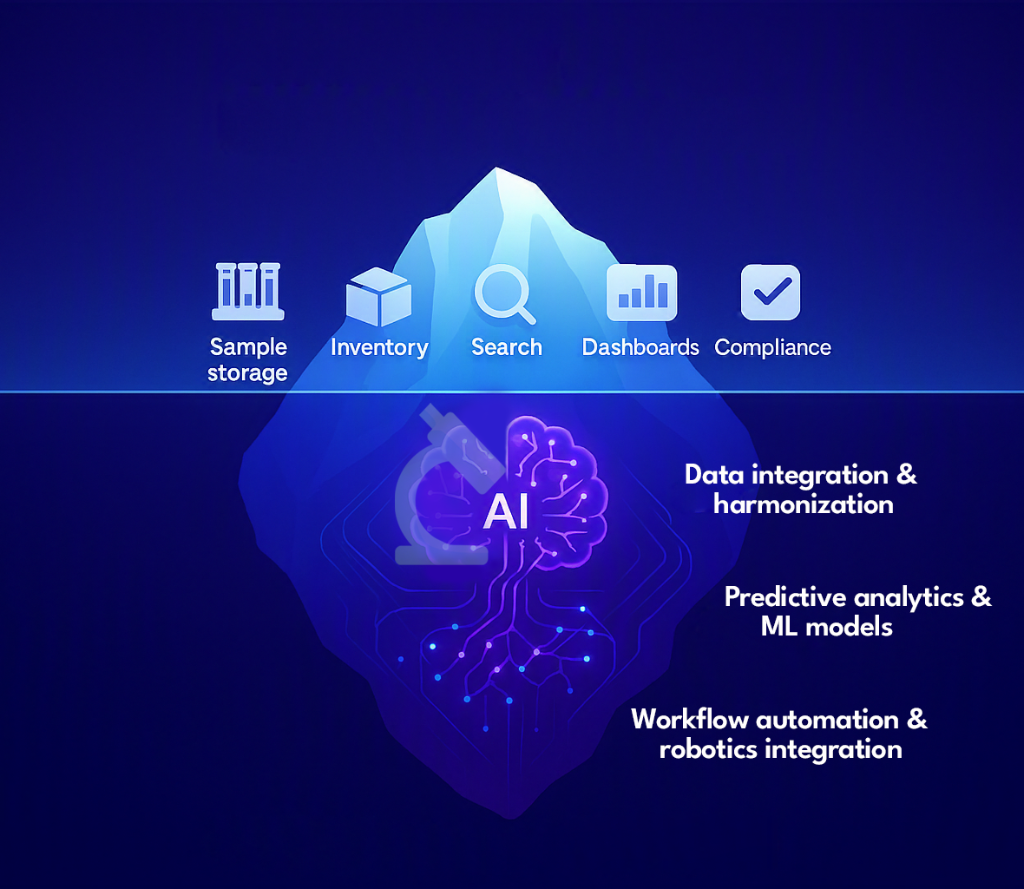
We often use the iceberg metaphor to explain what modern biobanking actually requires. Above the waterline, you see the visible capabilities every biobank needs: sample storage maps, inventory management, search tools, dashboards, and compliance workflows. These are essential — they keep the biobank running.
But the transformative capabilities — the ones that turn a biobank from a cost center into a strategic research asset — live below the surface:
Data Integration & Harmonization. AI normalizes heterogeneous data from instruments, clinical systems, and manual entries into a unified, queryable structure — eliminating the 'garbage in, garbage out' problem at its root.
Predictive Analytics & ML Models. Machine learning models trained on centralized biobank data can predict sample degradation, optimize storage utilization, flag quality anomalies before they become deviations, and identify cohort patterns invisible to human review.
Workflow Automation & Robotics Integration. AI-driven workflows automate repetitive tasks — from sample accessioning to aliquoting protocols to automated QC flagging — and integrate with robotic liquid handlers and automated storage systems.
The iceberg model makes one thing clear: the visible features are necessary but not sufficient. The biobanks that will lead the next decade are the ones building the AI-powered infrastructure below the waterline.
12 AI Capabilities That Are Already Transforming Biobanks
These are not roadmap features or concept demos. Every capability described below is available today inside LabCollector. Each one addresses a specific pain point that biobank managers encounter daily.
🔍 Intelligent Data Discovery
Finding information across a biobank with thousands of samples, hundreds of SOPs, and years of experimental data should not require an expert query language.
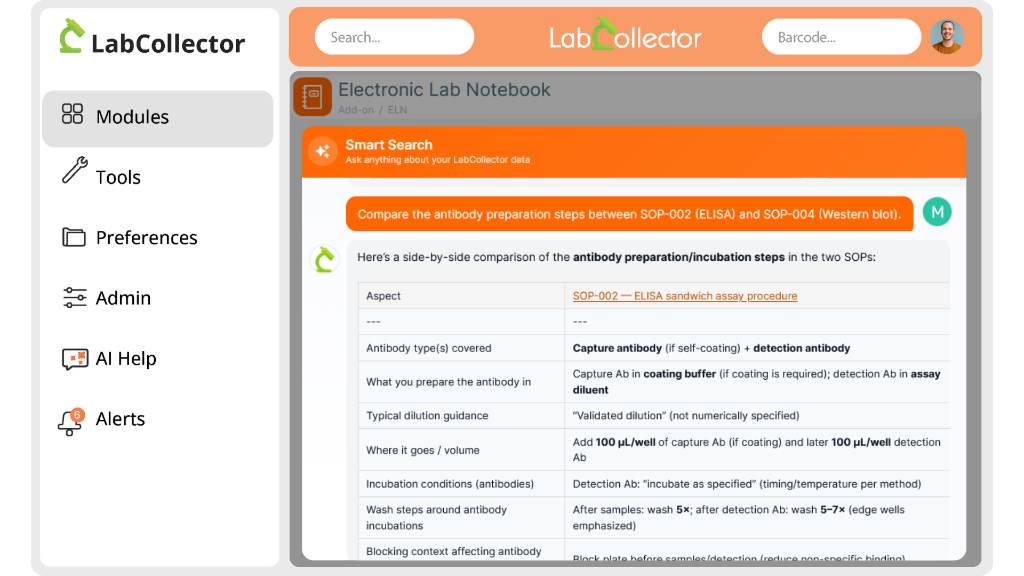
Smart Search
Ask questions in natural language — 'Compare the antibody preparation steps between SOP-002 and SOP-004' — and get structured, contextual answers drawn from your actual data.
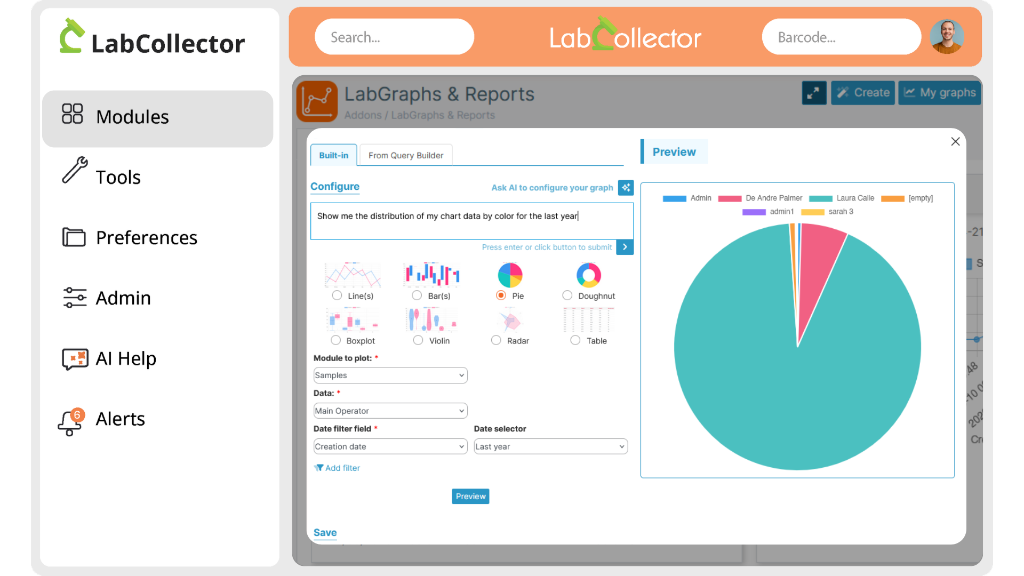
AI Graph Builder
Describe the visualization you need in plain English: 'Show me the distribution of my chart data by color for the last year.' The AI configures data sources, chart type, and filters automatically.
⚡ Workflow Automation & AI Agents
Repetitive tasks consume hours of biobank staff time every week. AI agents handle the mechanical work — so your scientists can focus on science.
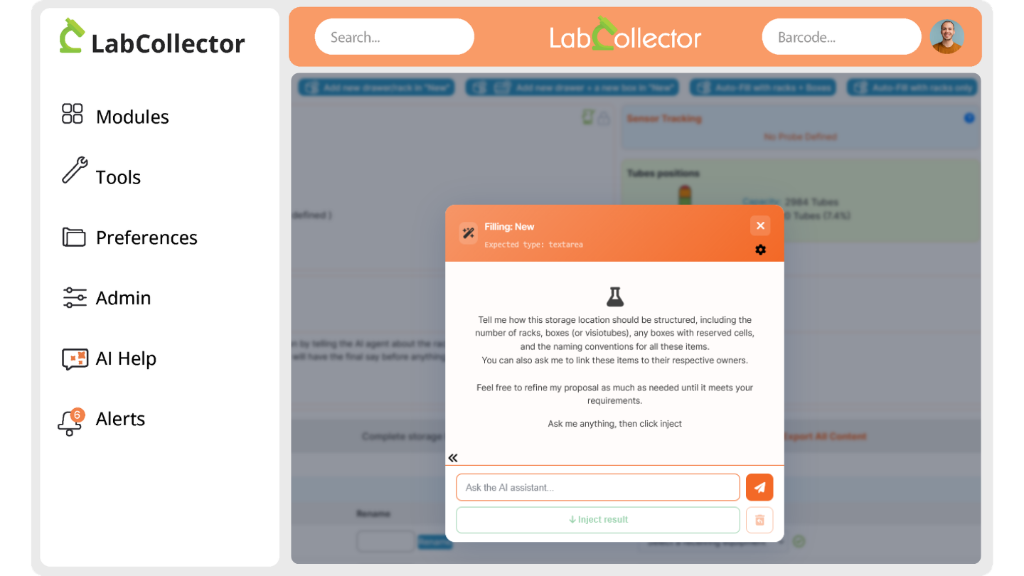
AI Storage Planner
Describe your storage requirements in natural language. The AI agent designs the complete freezer structure — racks, boxes, naming conventions — and injects it directly into LabCollector.
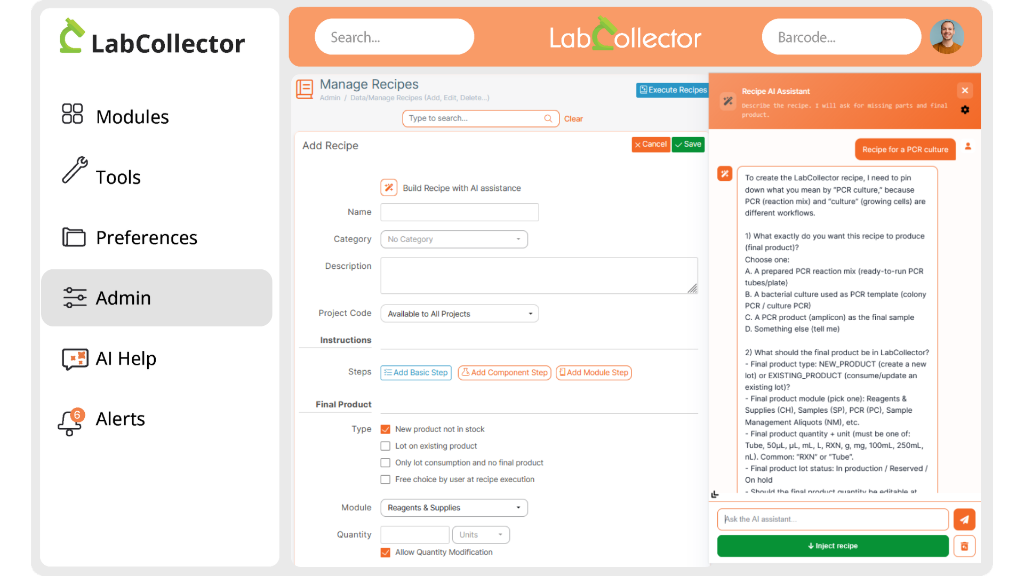
Recipe AI Assistant
Build lab recipes conversationally. Describe the protocol in plain language, and the AI guides you through components, quantities, steps, and final products.
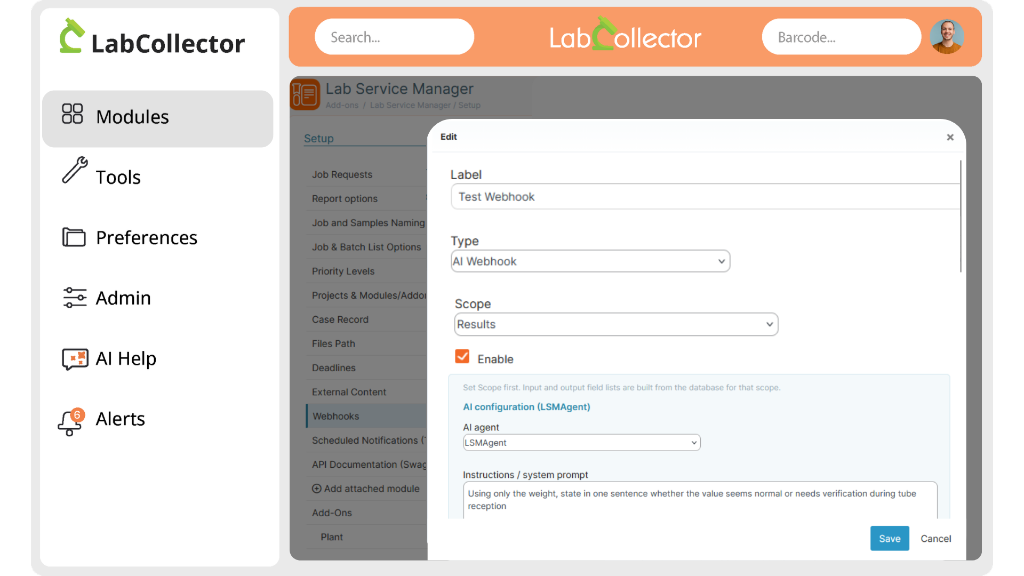
AI Webhooks
Trigger AI agents automatically on data events. When a new sample arrives or a result is entered, the webhook fires an AI validation — flagging anomalies before they propagate.
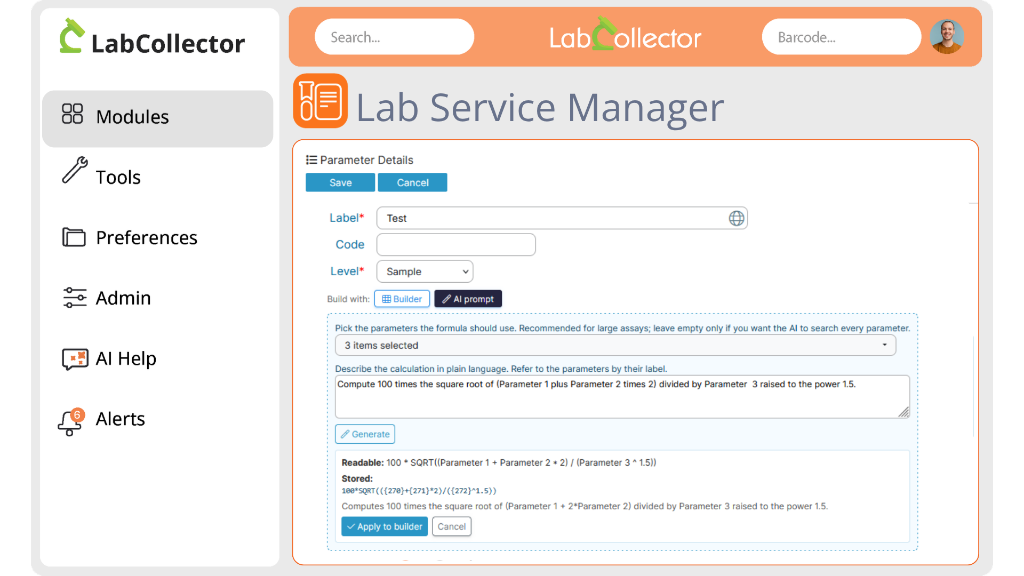
Calculated Fields with AI
Describe complex formulas in plain language: 'Compute 100 times the square root of Parameter 1 plus Parameter 2...' — the AI translates it into executable calculations.
📄 Intelligent Documentation & Reporting
Regulatory compliance demands meticulous documentation. AI eliminates the formatting, structuring, and cross-referencing burden — without compromising audit integrity.
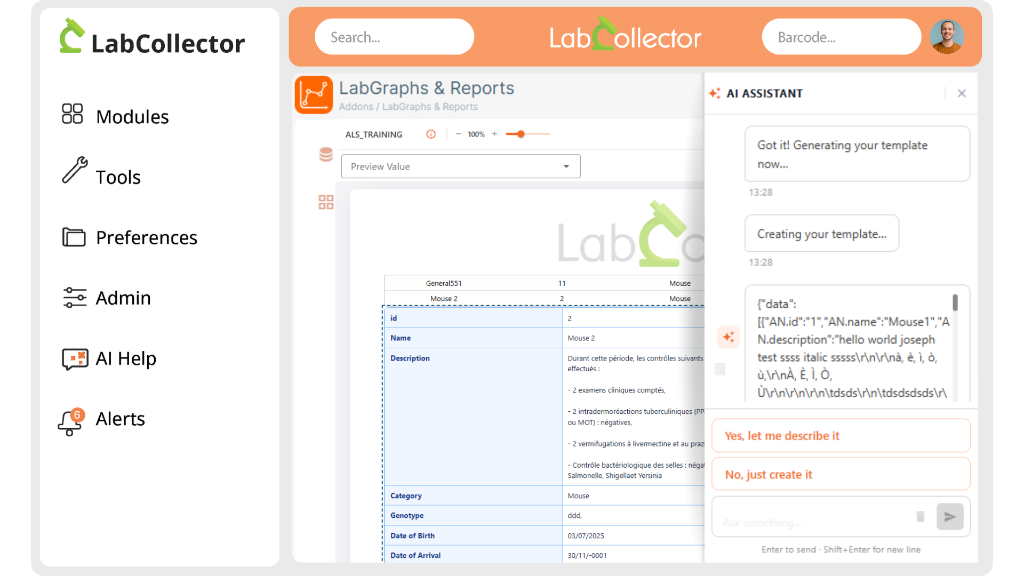
AI Report Builder
The AI assistant proposes report content based on your documents. Describe what you need, and it generates structured templates ready for review and sign-off.
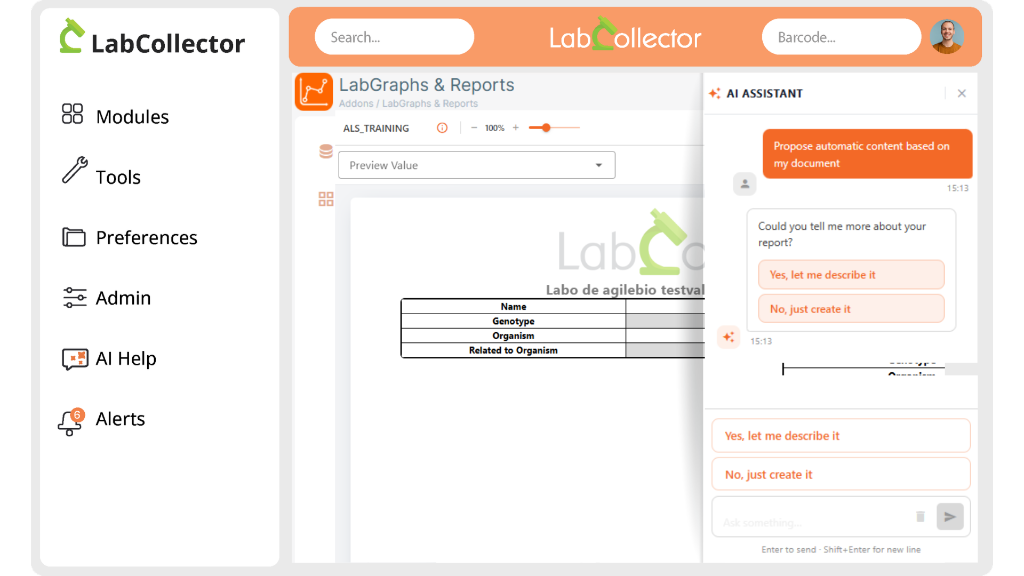
AI Report Generator
Interactive report generation from live data. The assistant guides you through content selection, layout, and data mapping — producing compliant reports in minutes.
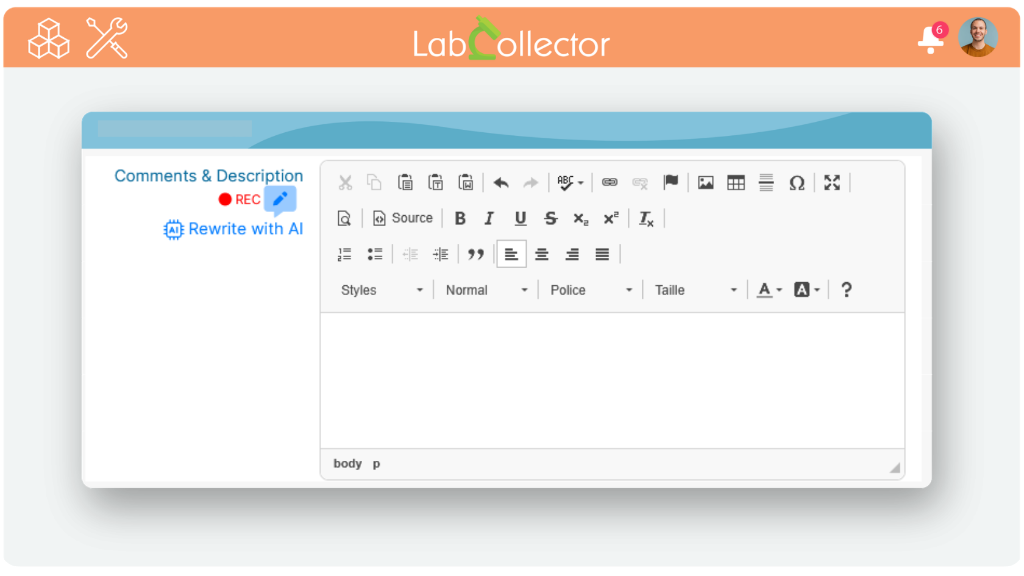
AI Text Enhancer
Rewrite descriptions, comments, and notes with one click. The AI improves clarity and consistency while preserving scientific accuracy.
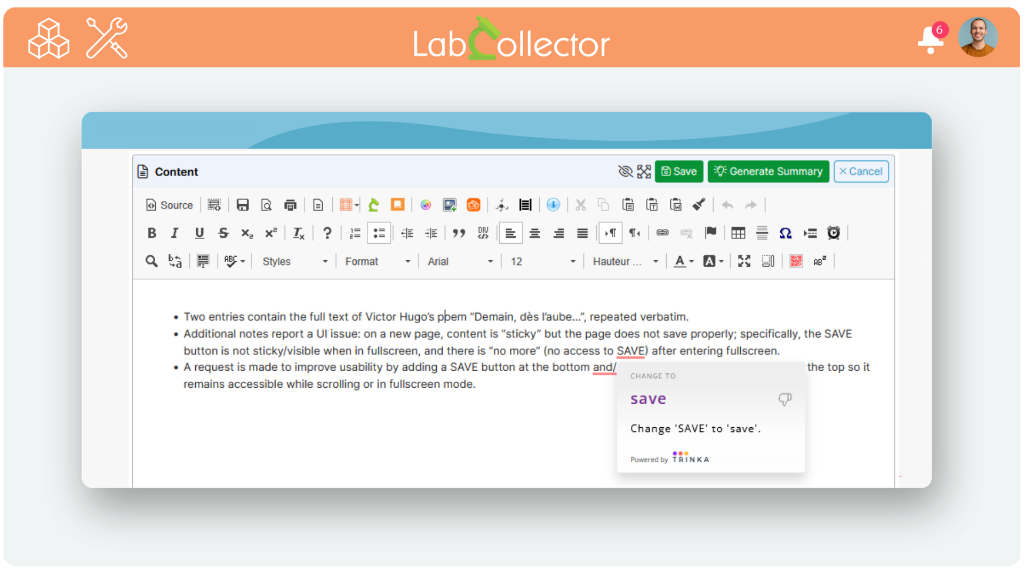
Grammar & Style Check (Trinka)
Academic-grade grammar checking integrated directly into your ELN entries and record descriptions. Ensures publications and regulatory submissions meet linguistic standards.
🛠️ AI-Assisted Configuration
Setting up a biobank LIMS traditionally requires weeks of configuration. AI accelerates this from weeks to hours.
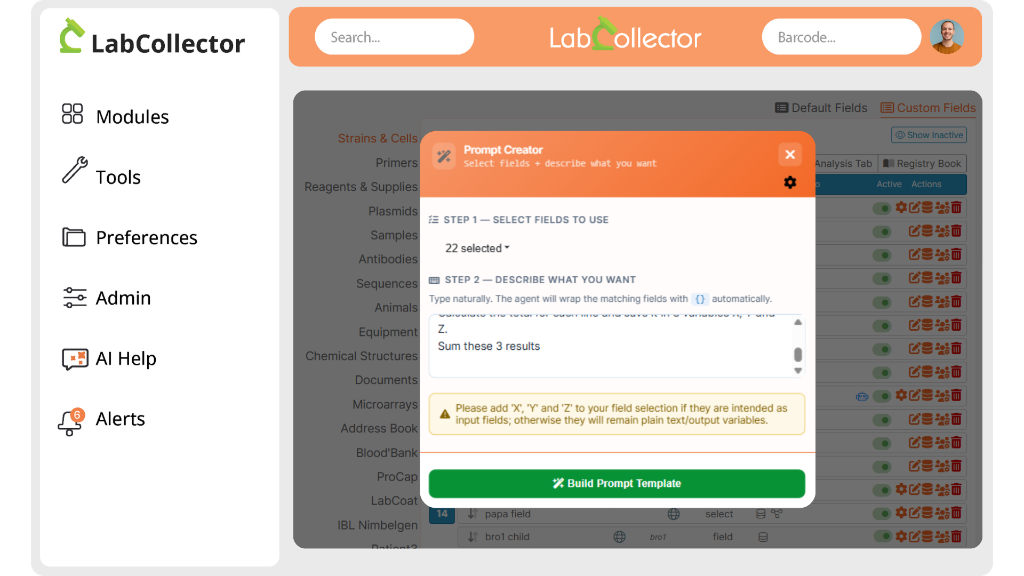
Custom Field Prompt Creator
Select your fields, describe the logic in plain text — the AI builds prompt templates that automate data enrichment and validation across your modules.
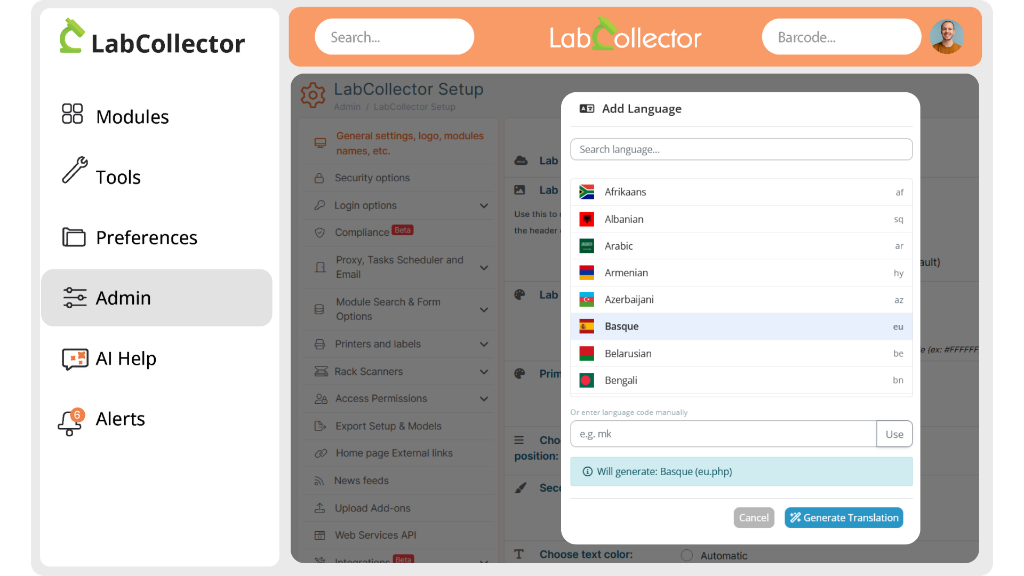
AI Language Translation
Deploy your biobank in any language. The AI generates complete interface translations instantly — no external agencies, no weeks of waiting.
The Convergence That Makes AI Biobanking Inevitable
Three forces are converging simultaneously, making AI-powered biobanking not a luxury but a necessity:
1. Sample Volumes Are Exploding
Precision medicine, large-scale clinical trials, population genomics, and pandemic preparedness programs are generating sample volumes that manual processes cannot sustain. Biobanks that scaled to 100,000 samples with spreadsheets will collapse at 1,000,000 without AI-driven automation.
2. Regulatory Expectations Are Tightening
GDPR, FDA 21 CFR Part 11, ISO 20387, and emerging AI governance frameworks demand traceability, data integrity, and audit readiness that paper-based or siloed systems simply cannot deliver. AI-powered LIMS provides compliance by design — every action logged, every decision traceable.
3. AI Models Require Clean, Structured Input
The most sophisticated ML model is useless on fragmented, inconsistent data. Biobanks that centralize their data today are building the training datasets that will power tomorrow's predictive models for sample quality, cohort selection, and research optimization.
"The biobanks investing in AI-ready infrastructure today will not just be more efficient. They will be the ones that make the discoveries."
— Pierre Rodrigues, Founder of LabCollector
From Traditional Biobank to AI-Powered Platform: The Practical Path
The transition does not require a multi-year digital transformation project. LabCollector's modular approach means you can activate AI capabilities incrementally:
Centralize Your Sample Data
Start with a single source of truth for all samples, storage locations, and associated metadata. This alone eliminates 80% of the "where is sample X?" queries that consume biobank staff time.
Week 1-2Connect Inventory & Compliance
Link reagent lots, consumables, and equipment records to your sample data. Enable audit trails and electronic signatures. Your biobank is now regulatory-ready.
Week 3-4Activate AI Search & Reporting
Turn on Smart Search to query your data in natural language. Enable the AI Report Builder to generate compliance documentation in minutes instead of hours.
Month 2Deploy AI Agents & Automation
Configure AI Webhooks to automatically validate incoming data. Use the Storage Planner to optimize freezer layouts. Let the Recipe Assistant build your standard protocols.
Month 3+The Biobank of Tomorrow Is Being Built Today
The biobanks that will lead the next era of precision medicine and translational research are not waiting for AI to mature. They are building the data infrastructure that AI requires — centralized, structured, auditable, and intelligent.
LabCollector was designed for exactly this transition. Not as a futuristic vision, but as a practical, modular platform that lets any biobank — from a 5,000-sample academic collection to a 2-million-sample national repository — adopt AI capabilities at its own pace, without disrupting existing operations.
The iceberg is real. What you see above the surface keeps your biobank running. What you build below it determines whether your biobank will lead — or simply survive.
"Every great biobank was once a simple freezer with good labels. The difference is what you build around it — and the intelligence you embed within it."
— Pierre Rodrigues, Founder of LabCollector · AgileBio
Ready to Build Your AI-Powered Biobank?
Discover how LabCollector's 12 built-in AI features transform biobanking from manual sample management to intelligent, automated science.